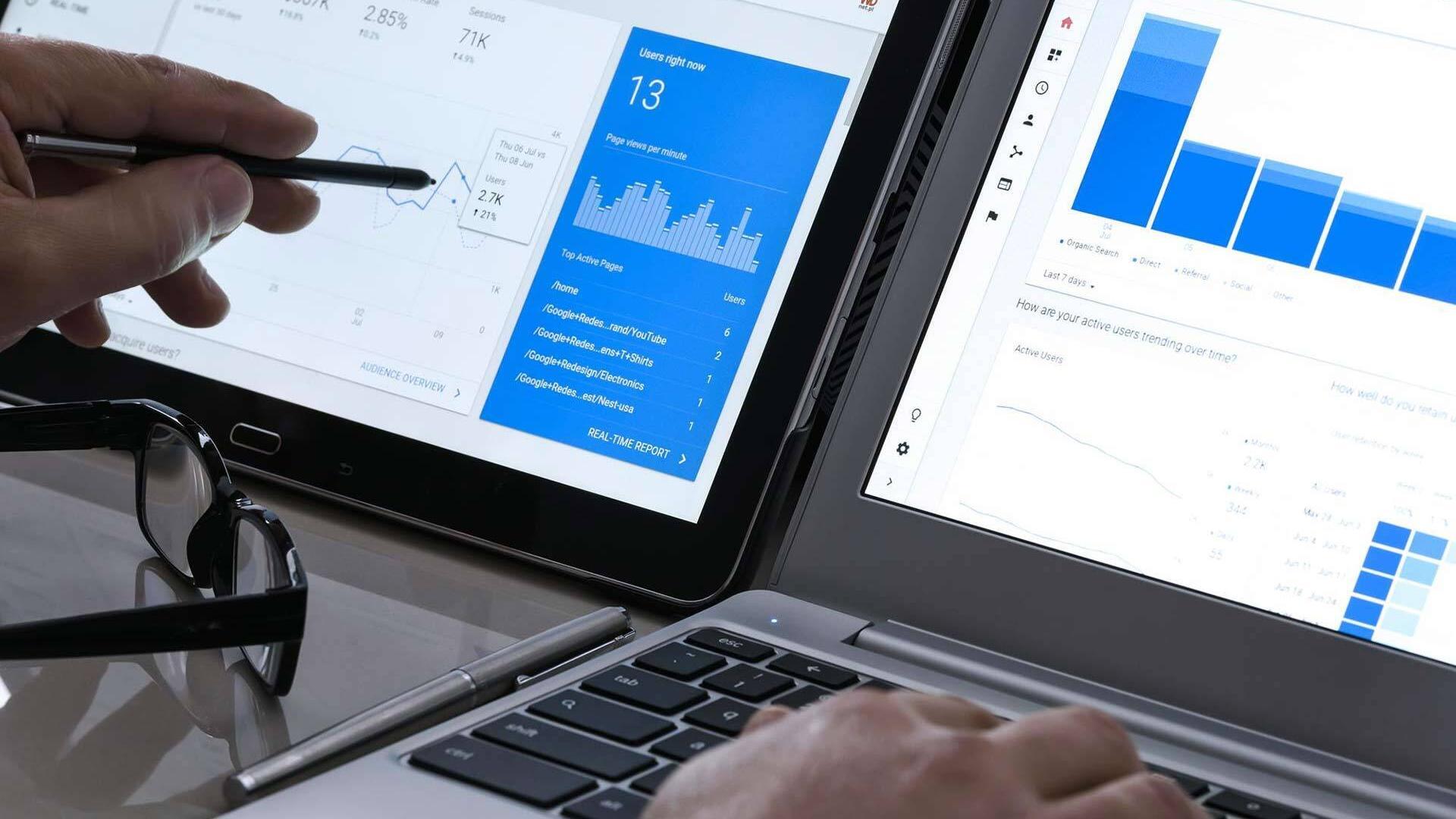
The digital landscape has changed substantially since 2020. Social media platforms have matured, Google Business Profiles have become more powerful, and AI assistants now answer questions directly. This raises a reasonable question: what role does a website play in this environment?
The answer lies in understanding what websites uniquely provide—capabilities that other platforms simply cannot replicate.
The Four Capabilities Only Websites Provide
Controlled narrative. Social media feeds are inherently chaotic. Tuesday's lunch special sits next to a three-week-old photo. Content appears in whatever order the algorithm decides, not the order that makes sense for your business. A website presents information in the sequence you choose, structured to answer questions and guide decisions. For service businesses especially, this control matters enormously. A solicitor can explain their approach to family law in a logical progression. An accountant can detail their expertise with tech startups, building from context to specifics. This structured explanation is impossible on social media.
Search visibility. When someone searches "accountant near me" or "solicitor Oxford," Google returns websites. Social profiles appear occasionally, but websites dominate search results—and search remains how most people find local services. If customers need to discover you rather than being referred directly, search visibility is essential, and search visibility requires a website.
Credibility at scale. For considered purchases—hiring a professional, choosing a contractor, selecting a service provider—people research before committing. They want to understand your approach, see examples of your work, and verify you're legitimate. A professional website signals competence and permanence. Its absence raises questions.
24/7 explanation. Your website answers questions while you sleep, while you're with clients, while you're on holiday. For businesses requiring explanation—complex services, detailed offerings, nuanced positioning—this constant availability converts interest into enquiries.
What Social Media and Google Business Profiles Actually Provide
These platforms are valuable, but for different purposes.
Social media excels at engagement and community. It keeps you visible to existing followers, showcases personality, and enables direct interaction. What it cannot do: structure information logically, appear in search results for service queries, or provide the depth needed for considered purchase decisions. You also don't control reach—Instagram or Facebook's algorithm decides who sees your content, and that calculation changes constantly.
Google Business Profile is excellent for local discovery. Hours, location, reviews, photos, basic service information—it handles these well and integrates directly into Maps. What it cannot do: explain complex services in depth, showcase case studies, differentiate your approach from competitors, or rank for anything beyond your business name and basic category.
Both platforms are also rented land. Algorithm changes alter reach overnight. Accounts get suspended, sometimes without clear reason or recourse. Platforms decline—MySpace seemed permanent once. Building exclusively on platforms you don't control means accepting that the landlord can change terms at any time.
The Emerging AI Factor
AI assistants—ChatGPT, Claude, Perplexity, Google's AI Overviews—increasingly influence how people research businesses and make decisions. When someone asks "recommend a good accountant in Oxford for a startup," the AI synthesises information from the web. Businesses with substantial, well-structured website content appear in these recommendations. Businesses without web presence are effectively invisible to AI systems.
This matters more each year as AI-assisted research becomes common. Your website isn't just for human visitors anymore—it's how AI systems learn what your business does and whether to recommend you.
Matching Investment to Business Model
The appropriate investment in a website varies by business model:
Service businesses with considered purchase cycles (accountants, solicitors, consultants, tradespeople handling significant projects) benefit most from websites. Potential clients research before making contact. A website that explains your approach, demonstrates expertise, and answers common questions converts researchers into enquiries.
Local retail and hospitality needs vary. A restaurant might do well with an excellent Google Business Profile and active social presence. A specialist retailer with unusual inventory benefits from a website that can explain what makes their selection different and capture search traffic.
B2B service providers almost always need websites. Purchasing decisions involve multiple stakeholders who will research vendors. A website provides the collateral needed for serious evaluation.
Capacity-constrained businesses with steady referral flow have less urgency—but even here, a simple website protects against future changes in referral patterns and provides legitimacy when referred clients verify the recommendation.
What an Effective Business Website Requires
Not every business needs the same type of site. The core requirements scale with business complexity:
At minimum: Clear statement of what you do, who you serve, what makes you credible, and how to make contact. This can be a single page, built on any platform, costing under £300 per year including hosting.
For service businesses: Add detailed service explanations, evidence of expertise (case studies, testimonials, credentials), and content that answers the questions potential clients ask before making contact.
For competitive markets: Add strategic content that captures search traffic, demonstrates thought leadership, and differentiates your approach from competitors.
The goal isn't the largest website possible—it's a website that serves your specific business development needs effectively.
The Strategic View
Websites aren't going away. They're evolving from brochures into hubs that connect with how people actually research and decide—through search, through AI, through comparison and evaluation. The businesses that invest in this presence now position themselves for how customers will find services over the coming decade.
The question isn't really "do I need a website?" It's "what role should my website play in how customers find and choose me?"—and that's a strategic question worth answering thoughtfully.
Tags
Related Articles
The AI Shift: A Practical Guide for UK Businesses Navigating the New Digital Landscape
From coding tools processing 195 million lines weekly to AI Overviews in 30% of UK searches. A data-driven guide to what's happening and how to adapt.
ArticlesIs Your Business Built on Someone Else's Land? The Growing Case for Digital Sovereignty
Only 35% of UK IT leaders know where their data is hosted. After major outages and new regulation, digital sovereignty is now a boardroom priority.
ArticlesOxford's Digital Economy by the Numbers, 2026
The most current data on Oxford's digital economy — tech clusters, visitor spend, creative sector revenue, and where the real opportunities lie.