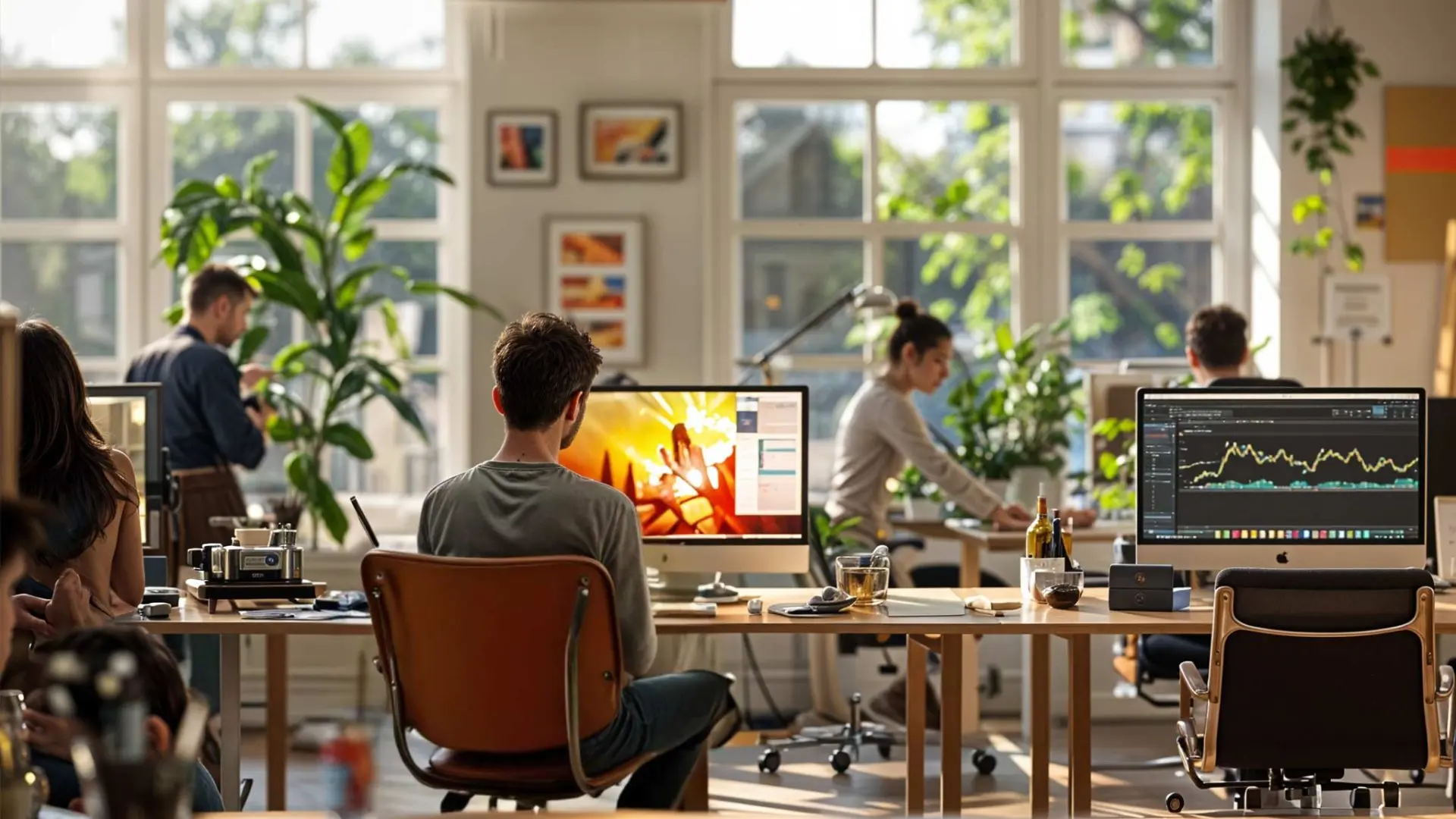
Users make judgments about websites within milliseconds. Before they read a single word, they've formed an impression: professional or amateur, trustworthy or suspect, relevant or irrelevant. These snap judgments happen below conscious awareness, driven by design elements that communicate emotional rather than rational messages.
Understanding these psychological mechanisms transforms web design from aesthetic exercise to strategic tool.
The Emotional Foundation of User Experience
Humans process visual information before linguistic information. When someone lands on a website, their brain evaluates visual patterns, colour relationships, spatial organisation, and overall coherence before the reading centres engage. This visual processing generates an emotional response—comfort, confusion, interest, anxiety—that colours everything that follows.
Don Norman, author of "Emotional Design," identifies three levels of design processing. Visceral design operates at the immediate, automatic level—first impressions, gut reactions, the "feel" of something before analysis. Behavioural design concerns usability—does the thing work as expected, can users accomplish their goals? Reflective design involves meaning and self-image—what does using this product say about who I am?
Effective websites address all three levels. The visceral response determines whether users stay long enough to experience the behavioural level. Behavioural satisfaction builds the trust that enables reflective connection.
How Emotional Design Affects SEO
Search engines cannot directly measure emotional response. But they measure proxies: how long users stay, whether they engage with content, whether they return. These behavioural signals increasingly influence rankings.
Bounce rate captures visceral failure. Users who leave immediately—within seconds of arriving—signal that the page didn't match expectations or created negative emotional response. High bounce rates on pages that should satisfy search intent suggest design problems, not just content problems.
Time on site reflects engagement. Users who feel comfortable, interested, and confident spend longer exploring. Design that creates positive emotional states encourages this exploration.
Pages per session indicates that users found value worth continuing. Intuitive navigation, clear visual hierarchy, and consistent design language enable this progression.
Return visits signal satisfaction strong enough to remember and return. This builds over multiple interactions and relates to the reflective level of design—users who feel good about their experience seek to repeat it.
Google's quality guidelines explicitly reference user experience. Core Web Vitals measure aspects of experience (loading, interactivity, visual stability) that have emotional components—frustration at slow loads, confusion at layout shifts, satisfaction at responsive interaction.
Visual Hierarchy and Cognitive Ease
The brain conserves cognitive resources. Given a choice between effortful processing and easy processing, it prefers easy. Websites that reduce cognitive load—through clear visual hierarchy, consistent patterns, and intuitive organisation—feel better to use.
Visual hierarchy guides attention through intentional contrast. Size, colour, position, and whitespace create pathways that direct users through content in intended order. Without clear hierarchy, users must work to determine what's important—and that work generates low-level frustration that degrades experience.
Consistency builds expectations that enable efficient processing. When buttons look the same throughout a site, users learn what buttons look like and stop consciously evaluating each one. Inconsistency forces constant re-evaluation—cognitively expensive and emotionally draining.
Whitespace isn't empty—it's relief. Dense pages without breathing room create cognitive pressure. Appropriate whitespace reduces competition for attention, making remaining elements more impactful.
Colour Psychology in Practice
Colour influences emotion, but not as simplistically as some suggest. Blue doesn't automatically create trust; red doesn't automatically create urgency. Context, combination, and cultural association matter more than isolated colour meanings.
Colour harmony affects emotional response more reliably than individual colours. Colours that work together—complementary, analogous, or triadic combinations—create visual comfort. Discordant colour combinations create unease, even when users can't articulate why.
Contrast enables function. Sufficient contrast between text and background isn't just accessibility compliance—it's cognitive ease. Low contrast forces effort that accumulates as fatigue.
Colour consistency builds brand recognition and trust over time. Arbitrary colour variation within a site suggests disorder; consistent colour language suggests competence and intentionality.
The Role of Typography
Typography communicates before being read. Font choice, size, spacing, and hierarchy create impressions independent of content.
Legibility is the foundation. Body text that's difficult to read—too small, too low contrast, too tightly spaced—creates friction with every sentence. The content might be excellent, but the experience of accessing it is poor.
Typographic hierarchy organises content visually. Headings, subheadings, and body text at clearly differentiated sizes help users scan and navigate. This scanning capability matters enormously—users rarely read linearly, and typography enables the jumping that actual reading behaviour requires.
Font personality should align with brand personality. Formal businesses benefit from traditional serifs or clean sans-serifs. Creative businesses might use more distinctive type. The match between font personality and business personality creates coherence that users feel without analysing.
Loading Performance as Emotional Experience
Speed is emotional. Waiting creates anxiety, frustration, impatience. These negative emotions colour the subsequent experience even when content eventually loads.
Research consistently shows conversion rate decline with each second of delay. But this isn't just about speed as a feature—it's about speed as emotional experience. Fast sites feel competent, modern, respectful of user time. Slow sites feel neglected, outdated, careless.
Perceived performance can differ from actual performance. Progress indicators, skeleton screens, and meaningful first content reduce perceived wait time even when actual time doesn't change. These techniques acknowledge the user's wait rather than leaving them in uncertainty—a fundamentally more respectful emotional experience.
Trust Signals and Social Proof
Trust is an emotion. Design either builds it or undermines it.
Professional appearance signals competence. Visual polish—attention to detail, consistent spacing, quality images—suggests the business behind the site cares about how it presents itself. This extends to inference about how they might care for customers.
Social proof leverages our tendency to look to others when uncertain. Testimonials, client logos, case studies, and reviews reduce perceived risk by demonstrating that others have trusted successfully. The emotional shift from "should I trust?" to "others already do" significantly lowers barriers.
Security indicators address specific anxiety about online transactions. SSL certificates, payment logos, and privacy commitments address fears that might otherwise prevent action.
Contact information visibility signals legitimacy. Businesses hiding behind contact forms with no phone number or address raise suspicion. Visible, accessible contact information suggests a business with nothing to hide.
Micro-interactions and Delight
Small interactive details—button animations, loading spinners, hover effects, success confirmations—create moments of connection between user and interface.
Feedback acknowledges user action. When a user clicks a button, immediate visual response confirms the action registered. Without feedback, users wonder whether anything happened and may click again—creating frustration and potentially duplicate actions.
Celebration of success turns routine completions into positive moments. A simple animation when a form submits successfully creates a minor emotional peak that enhances overall experience.
Personality through interaction makes interfaces memorable. A loading animation with character, a clever hover effect, a surprising transition—these details distinguish one experience from another and contribute to reflective design satisfaction.
Practical Application
Audit emotional response. Show your site to people unfamiliar with it. Ask what they feel, not what they think. First impressions are emotional—capture them before analysis kicks in.
Test with real users. Watch people use your site. Note where they hesitate, backtrack, or express frustration. These moments reveal emotional friction that analytics can't capture.
Prioritise the visceral level. Before optimising conversion paths, ensure the immediate impression is positive. Users who bounce immediately never reach your carefully optimised conversion elements.
Invest in performance. Speed improvements have emotional ROI that compounds across all other optimisations. A faster site makes every other element of experience better.
Maintain consistency. Design systems that enforce consistency pay emotional dividends through cognitive ease. The effort invested in creating systematic design reduces cognitive load for every subsequent user.
Consider the reflective. What does using your site say about users? What identity does it reinforce? The most loyal relationships form when businesses and customers share values that using the product affirms.
Emotional design isn't decorative addition to functional websites. It's the foundation on which functional effectiveness rests. Users who feel good stay longer, engage more, and return more often—behaviours that benefit both conversion and search visibility. The most effective websites aren't those with the best features but those that best understand and serve human emotional needs.
Tags
Related Articles
AI in Content Creation, Web Design and SEO: The Balanced View Your Business Needs
Where AI genuinely helps, where it quietly causes damage, and why the human element still determines whether your digital presence thrives.
ArticlesHow to Choose a Web Design and SEO Partner for UK Businesses
Evaluating agencies is hard when you're not an expert. A framework for assessing capabilities, spotting warning signs, and choosing well.
Articles94.8% of Websites Fail Accessibility Standards — Here's What Oxford Businesses Must Know
94.8% of websites fail WCAG 2.2 accessibility standards. With new EU and UK regulation now enforceable, here's what businesses need to know.